How decreased water intake affects the kidneys
Published on April 17, 2026
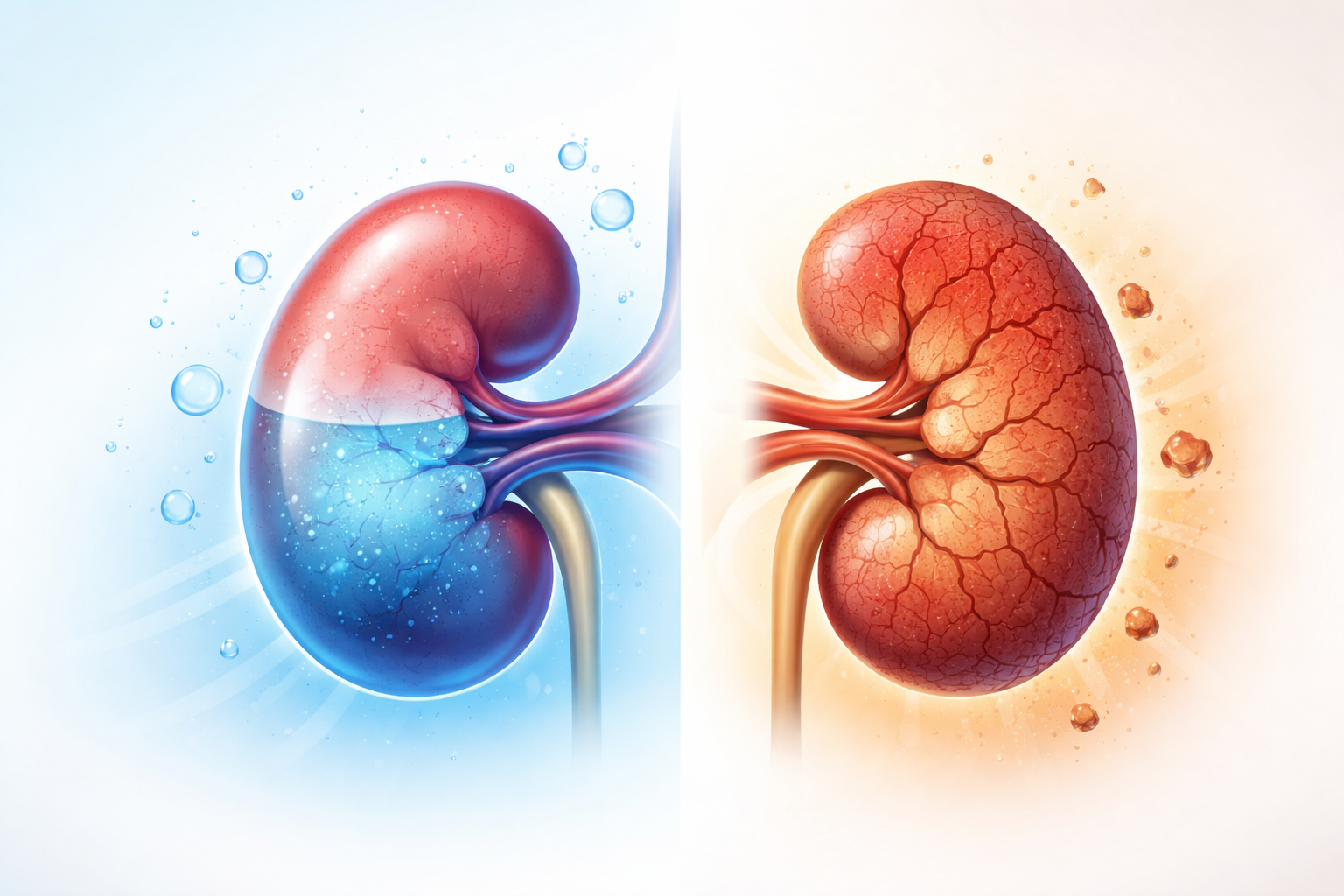
The kidneys filter approximately 180 litres of blood daily, producing 1–2 litres of urine to eliminate toxins, excess salts, and urea. Adequate water intake dilutes these waste products and supports optimal glomerular filtration rate (GFR). With reduced intake, the body activates vasopressin (antidiuretic hormone), concentrating urine and raising urine osmolality. This leads to glomerular hyperfiltration in early stages—a compensatory mechanism where the kidneys strain to maintain output—but over time, it promotes inflammation, oxidative stress, and tubular damage.
Chronic low hydration also reduces renal blood flow, potentially causing ischemia-like stress. Animal studies demonstrate that water restriction induces renal tubular damage, glomerular shrinkage, increased apoptosis, and elevated proinflammatory cytokines and lipid peroxides. In rats, chronic insufficient water intake exacerbated dyslipidemia and reduced energy expenditure, with partial recovery upon rehydration but lasting structural changes.
In humans, low fluid intake correlates with higher urine specific gravity, which observational data link to elevated eGFR initially (suggesting hyperfiltration) followed by faster decline. Recurrent dehydration, common in hot climates or strenuous occupations, is implicated in Mesoamerican nephropathy and similar CKD epidemics in regions like Sri Lanka and India, where heat stress and low water access compound kidney injury.
Research evidence from large scale population based studies
Large population-based studies provide compelling support. A cross-sectional analysis of the 2005–2006 U.S. National Health and Nutrition Examination Survey (NHANES) found higher CKD prevalence among those with fluid intake below 2 litres per day compared to over 4.3 litres (adjusted odds ratio 2.52). Plain water intake, rather than other beverages, drove the protective association.
A prospective Canadian cohort followed for 6 years showed that 24-hour urine volume greater than 3 litres per day was associated with slower eGFR decline. The adjusted odds ratio for rapid renal decline (eGFR loss >5% per year) was 0.46 for high urine volume versus 1–1.9 litres per day.
Another study reported that fluid intake of ≥3.2 litres per day linked to a 50% lower CKD prevalence compared to 1.8 liters per day. Low plain water intake specifically raised CKD risk (adjusted OR 2.36 in some analyses).
A 2021 analysis of over 4,600 participants linked low water intake to 35% higher CKD risk and 42% higher albuminuria risk versus high intake, after adjusting for confounders like age, BMI, diabetes, and hypertension. Higher water volume also correlated positively with eGFR and negatively with urinary albumin-to-creatinine ratio.
A 2024 study in older adults at high cardiovascular risk found that higher baseline plain water (especially tap water) intake associated with less eGFR decline over 3 years compared to the lowest tertile.
Recurrent dehydration in hypertensive rat models hastened CKD progression, increased arterial pressure, reduced GFR by up to 25–39%, and promoted renal inflammation and fibrosis. Sub-morbid dehydration in community populations showed J-shaped associations with eGFR, indicating strain even without overt symptoms.
However, evidence in established CKD is mixed. One RCT found that coaching patients with CKD to drink more water did not slow kidney function decline overall, though it suppressed vasopressin and benefited those with previously low intake. In advanced CKD or dialysis, fluid restriction may be necessary to avoid overload.
Low water intake also heightens kidney stone risk—the leading cause tied to insufficient fluids—by concentrating minerals like calcium and oxalate. Guidelines recommend increasing intake to achieve 2–2.5 liters of urine daily to halve recurrence risk.
Most healthy adults should aim for 2–3 liters of total fluid daily (about 8–12 cups), adjusting for climate, activity, and body size—more in hot weather or during exercise. Plain water is ideal; sugary or caffeinated drinks may not offer the same benefits. Urine color (pale yellow) serves as a simple hydration marker.
Those at higher risk—older adults, people in hot occupations, or with diabetes/hypertension—benefit most from consistent hydration. Severe dehydration requires prompt rehydration to prevent acute kidney injury, which can become irreversible if prolonged.
Decreased water intake strains the kidneys through concentrated urine, hyperfiltration, inflammation, and reduced perfusion, raising risks of stones, albuminuria, and CKD progression. Robust observational and mechanistic evidence supports that habitually low intake accelerates renal decline, while higher plain water consumption appears protective in at-risk or healthy populations. Although RCTs in established CKD show nuanced results, maintaining adequate hydration remains a low-cost, accessible strategy for kidney health. Through the Dr Fernandes Health, Nutrition and Wellness program, preventive medicine guidance and support in achieving optimal health is provided and available for consultations.