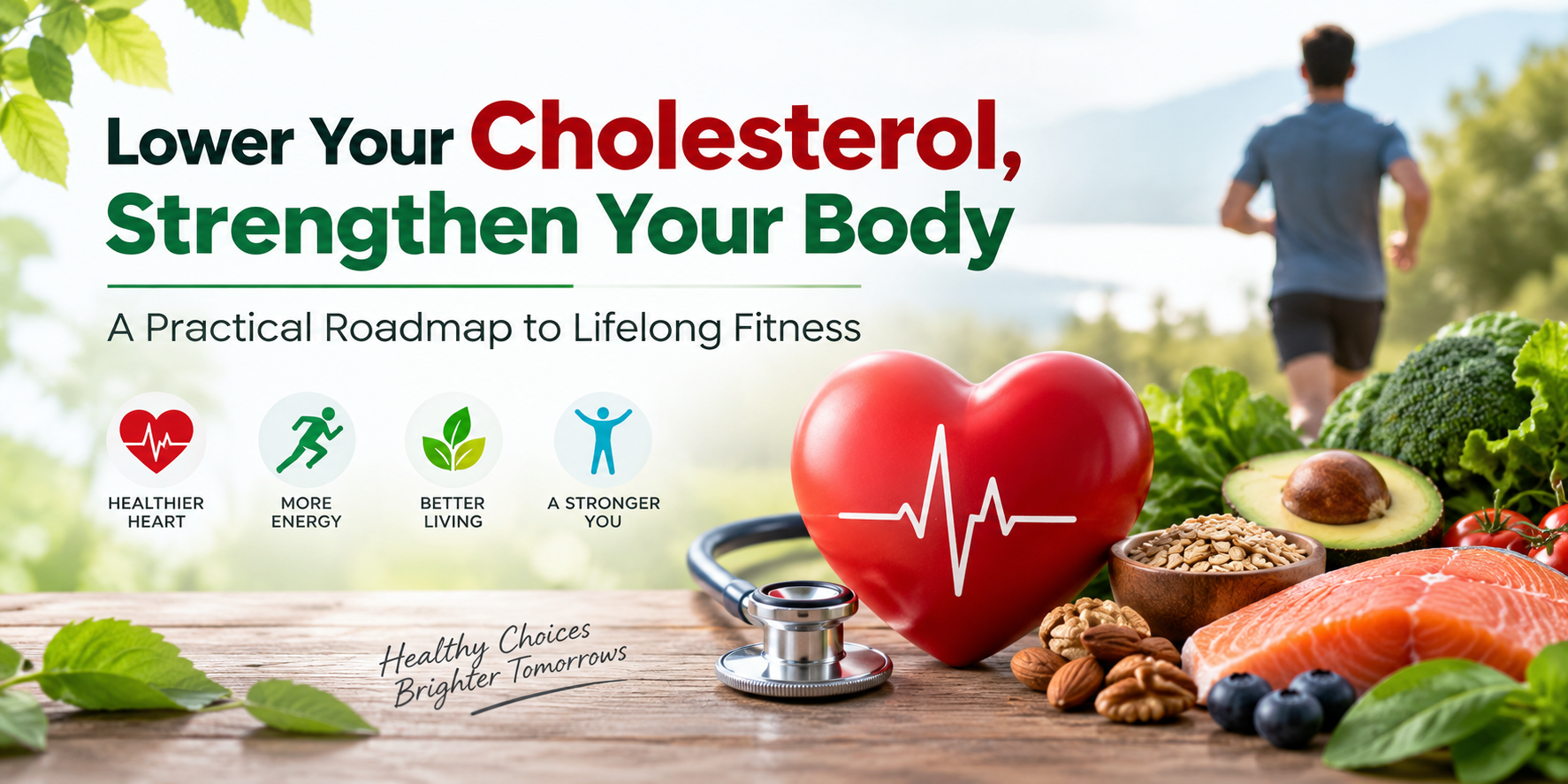
Lower Your Cholesterol, Strengthen Your Body: A Practical Roadmap to Lifelong Fitness
Published on September 8, 2026
Lower Your Cholesterol, Strengthen Your Body: A Practical Roadmap to Lifelong Fitness
High cholesterol is often called a “silent” health problem because it usually produces no warning symptoms. Yet, over the years, excess LDL cholesterol can contribute to plaque formation inside the arteries, increasing the risk of heart attack and stroke. The good news is that cholesterol is not simply a number on a blood report. It is something we can influence through food, physical activity, body weight, sleep, stress management and, when necessary, medication.The goal should not merely be to “lose weight” or chase a particular cholesterol number. The real objective is to build a body that is metabolically healthy, physically capable and resilient. Here is how to do it.
Make your plate your first medicine
One of the most powerful ways to improve LDL cholesterol is to change the quality of the fat in your diet. Saturated fats-found in foods such as fatty meats, butter, ghee, full-fat dairy products and many highly processed foods-can raise LDL cholesterol. Replacing them with unsaturated fats is a smarter strategy for long-term heart health.
Build meals around vegetables, fruits, beans, lentils, whole grains, nuts, seeds and healthy sources of protein. Fish, particularly oily fish, can be included regularly. Choose lean poultry or lean meat when you eat meat, and reduce processed meats.
For an Indian diet, this does not mean abandoning traditional food. It means improving it. Choose dal, rajma, chana, vegetables, whole grains, oats, millets and nuts more frequently. Use oils sensibly and avoid turning otherwise healthy foods into calorie-dense meals through excessive frying, butter, cream or ghee.
Increase soluble fibre
Fibre is one of the most useful nutritional tools for cholesterol management. Soluble fibre, found in foods such as oats, beans, lentils and many fruits, can reduce the absorption of cholesterol in the digestive tract.
A simple rule is: add fibre before you remove food.
Instead of asking, “What can I not eat?”, ask, “What can I add?” Add vegetables to lunch and dinner, fruit to breakfast, legumes to meals and whole grains instead of refined grains.
This approach improves nutrition while also helping fullness and weight management.
Treat exercise as a daily prescription
You do not need to become an athlete to improve your cholesterol and fitness. Consistency matters more than intensity.
Aim for at least 150 minutes of moderate-intensity physical activity each week, spread throughout the week. Brisk walking, cycling, swimming, dancing and similar activities all count. Strength training should also be incorporated at least twice weekly.
A practical weekly routine could be:
- 30–45 minutes of brisk walking, five days a week
- Strength training two or three days a week
- Regular movement breaks during prolonged sitting
- Additional enjoyable activities such as swimming, cycling, sports or hiking
Exercise can help improve the cholesterol profile while simultaneously improving cardiovascular fitness, blood pressure, insulin sensitivity and body composition.
Reduce waist size, not just body weight
Excess body fat-particularly around the abdomen-is closely associated with metabolic problems, including unfavorable cholesterol and triglyceride levels.
You do not necessarily need dramatic weight loss to see meaningful health benefits. NHLBI notes that adults with overweight or obesity may improve LDL and HDL cholesterol with relatively modest weight loss.
Focus on sustainable changes rather than crash diets. Losing weight rapidly through extreme restriction can be difficult to maintain and may sacrifice muscle.
The better goal is less fat, more muscle and better fitness.
Protect your muscle
Fitness is not simply about being lighter. A strong body requires muscle.
As we age, maintaining muscle becomes increasingly important for mobility, independence, metabolic health and physical resilience. Resistance training-using weights, machines, resistance bands or body weight-should therefore be part of a cholesterol-conscious lifestyle.
Combine strength training with adequate protein from foods such as pulses, beans, dairy or suitable alternatives, eggs, fish and lean protein sources.
Control sugar, refined carbohydrates and ultra-processed foods
Cholesterol management is not only about fatty food. Excess calories, added sugars and highly refined carbohydrates can contribute to weight gain and elevated triglycerides.
Limit sugary beverages, sweets, bakery products, refined snacks and highly processed foods. The 2026 American Heart Association dietary guidance emphasizes minimally processed foods, vegetables, fruits, whole grains, healthy proteins and unsaturated fats while minimizing added sugars and excess sodium.
You do not need a perfect diet. You need a diet you can follow for years.
Sleep and stress are part of cardiovascular health
A healthy heart needs more than healthy food.
Aim for approximately 7–9 hours of quality sleep each night. Poor sleep is associated with an unfavorable cardiovascular risk profile. Chronic stress can also make healthy eating, exercise and weight control more difficult.
Walking, meditation, breathing exercises, hobbies, social connection and adequate recovery can all help create a healthier lifestyle.
Never ignore smoking
If you smoke, quitting is one of the most important things you can do for cardiovascular health. Smoking damages blood vessels and can lower HDL cholesterol. Eliminating tobacco exposure should be considered a central part of any heart-health plan.
Know your numbers-but don’t obsess over one number
A cholesterol report should be interpreted as a complete picture rather than as a single “good” or “bad” number. LDL cholesterol, HDL cholesterol, triglycerides and other risk factors all matter. Your age, blood pressure, diabetes status, smoking history, family history and previous cardiovascular disease can substantially change what an appropriate treatment target should be.
For some people, lifestyle changes may be enough. For others-particularly those at high cardiovascular risk-medication such as a statin may be necessary. Medication is not a failure of lifestyle; it is another tool for reducing cardiovascular risk when appropriate.
The 90-day challenge
If you want a simple starting point, commit to three months of disciplined consistency:
Eat more plants.
Choose healthier fats.
Walk every day.
Strength-train regularly.
Reduce ultra-processed foods and added sugar.
Maintain a healthy waistline.
Sleep 7–9 hours.
Avoid tobacco.
Know your cholesterol and blood pressure.
The most effective cholesterol-lowering strategy is rarely a single food, supplement or fashionable diet. It is a lifestyle that you can repeat tomorrow, next month and ten years from now.